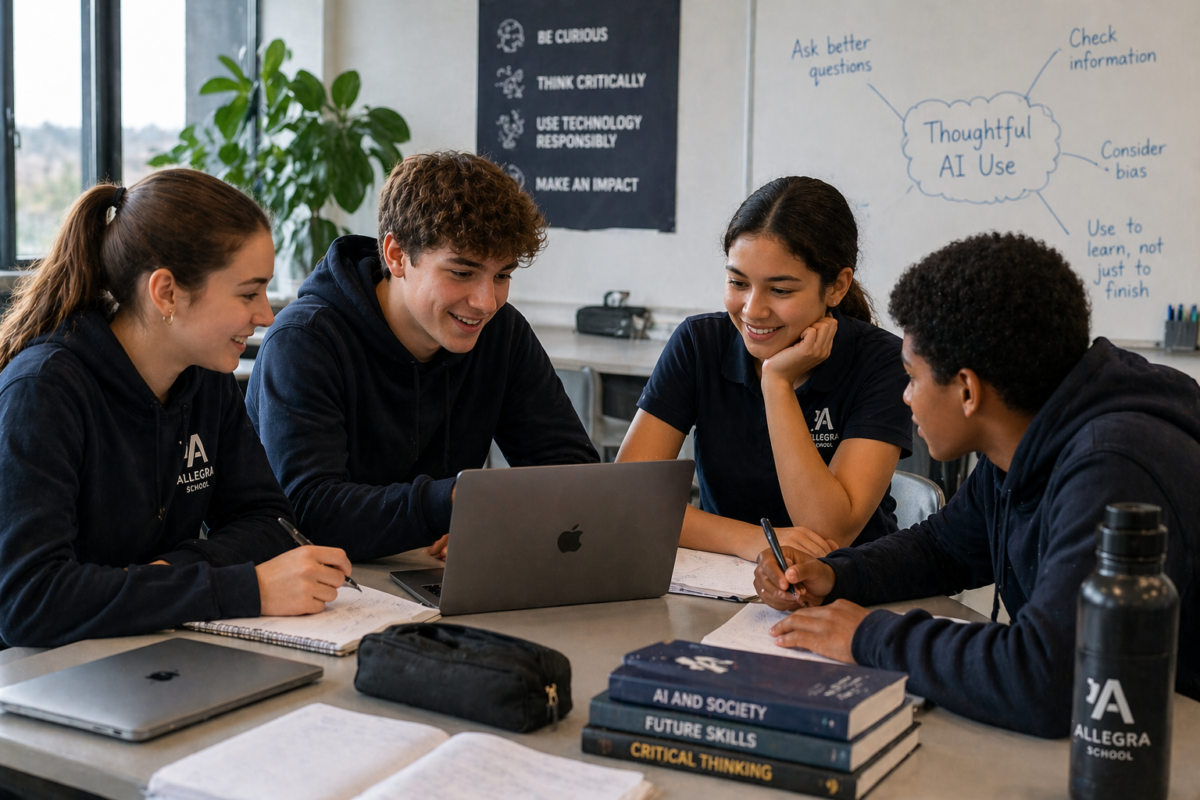
Artificial intelligence is already part of our students’ world.
They are using it to generate ideas, answer questions, and complete tasks, often independently and often without guidance. The question for schools is no longer whether students should use AI. The question is how we support them to use it well.
At Allegra School, our focus is not on speed or shortcuts. It is on developing thoughtful, capable young people who understand how to use tools like AI with purpose.
From answers to understanding
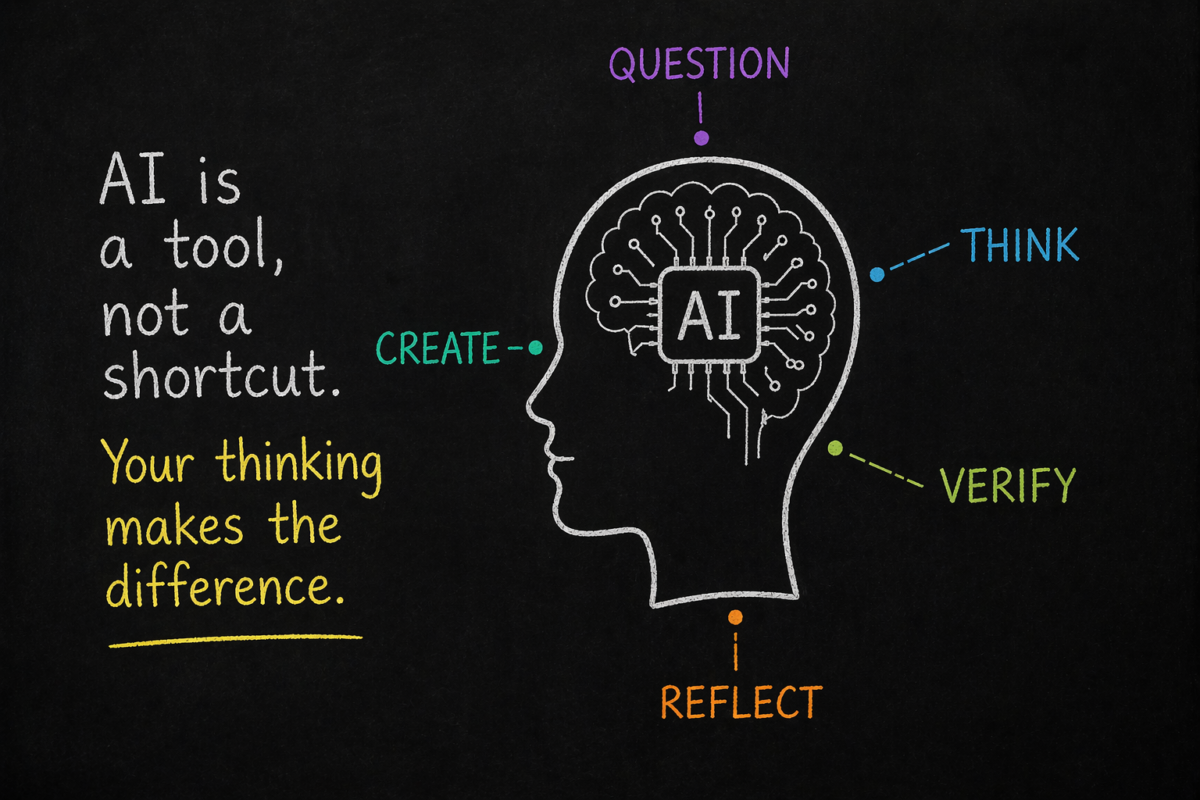
AI can produce responses instantly. What it cannot replace is the process of thinking.
Within our personalised learning environment, students are supported to move beyond simply accepting an answer. They are encouraged to question, reflect, and refine.
This might look like:
- Comparing AI generated responses with their own ideas
- Identifying where information is incomplete or inaccurate
- Using AI as a starting point, not an end point
This approach aligns with our commitment to Supported, Impactful and Personalised Learning. Every student is working at their point of need, with the guidance to deepen understanding rather than bypass it.
Developing critical and informed learners
AI tools can sound confident, even when they are wrong. That makes critical thinking more important than ever.
Through everyday learning experiences, students are building the skills to:
- Verify information across multiple sources
- Recognise bias and missing perspectives
- Ask more precise and purposeful questions
These capabilities sit at the heart of Student Voice, Engagement and Agency. Students are not passive recipients of information. They are active participants in their learning, making decisions about what to trust and how to respond.
Supporting creativity and independence
Used thoughtfully, AI can expand what is possible for students.
In classrooms and common learning spaces, students are using AI to:
- Generate and refine ideas
- Explore different ways of expressing their thinking
- Experiment with writing, design, and problem solving
Importantly, the emphasis remains on the student’s voice. AI may support the process, but it does not replace individuality, creativity, or lived experience.
This reflects our commitment to Authentic Connections, Wellbeing and Growth. Students feel supported to take risks, try new approaches, and build confidence in their own thinking.
Grounded in relationships and guidance
Technology does not replace the role of strong relationships. It makes them more important.
At Allegra, staff work closely with students to guide how tools like AI are used. Conversations about ethics, authorship, and responsibility are embedded into learning, not treated as separate topics.
Students are supported to understand:
- When it is appropriate to use AI
- How to acknowledge and reflect on its use
- Why their own thinking still matters
This sits within a Respectful, Innovative and Collaborative Culture, where new ideas are explored thoughtfully and with care.
Preparing students for a changing world
AI will continue to evolve. The tools students use today will not be the same tools they use in the future.
What will remain constant is the need for:
- Critical thinking
- Adaptability
- Confidence in their own voice
Our role is to prepare students not just to keep up with change, but to navigate it with clarity and purpose.
At Allegra School, AI is not the focus. The student is.
Technology is simply one part of a broader commitment to creating supportive and transformative learning experiences, where every young person is known, valued, and equipped for what comes next.